
Written in January 2026
Yesterday I went to the bank. I bank with Nationwide because they still have branches where you can speak to a person. Anecdotally I’m somewhat of an autistic outlier in preferring to interact with a real person in a bank because I can’t be doing with the machines (I detest self check outs too). I’ve tried them, it takes me longer to work out what I’m doing and to actually get it done than if I use the counter service. Anyway, I digress.
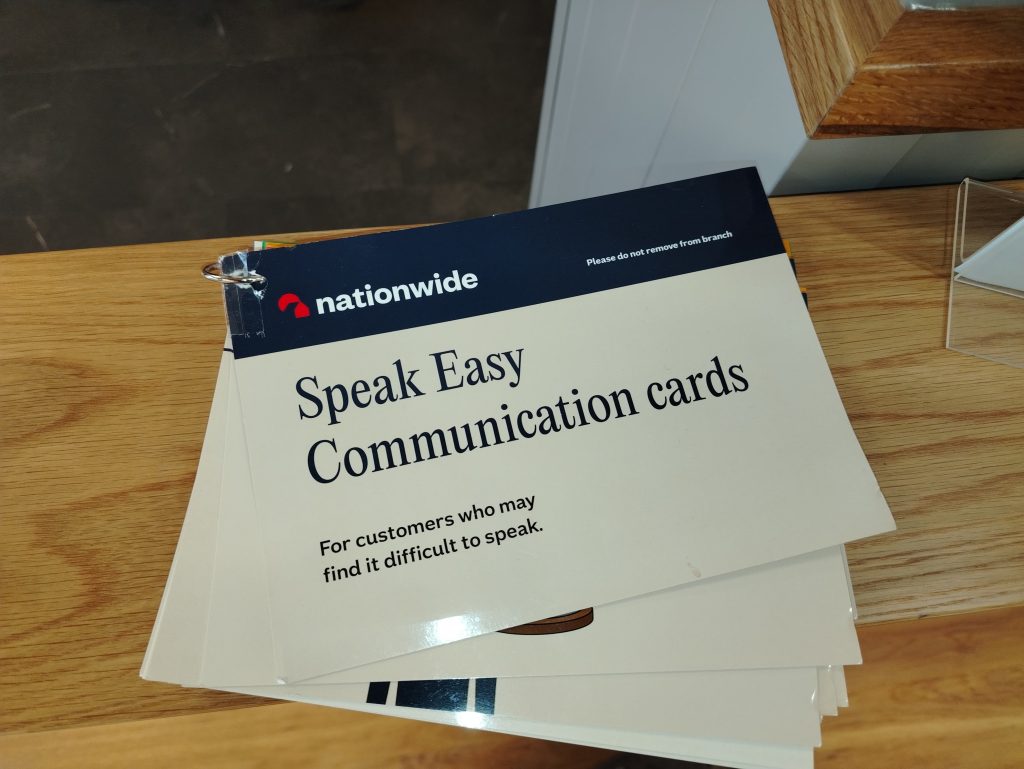
I saw a set of communication cards on the side which were there for any customer to use. The cover explains they’re for customers who may find it difficult to speak, and there are many reasons why someone may find it difficult to speak. I’m going to list a few just for the sake of making a list:
- Sore throat/laryngitis
- Aphasia due to stroke or other brain injury
- Apraxia of speech
- Cerebral palsy
- Situational mutism (stress/anxiety related)
- Unreliable speech
- Motor neurone disease
- Dysarthria
- Hearing issues/loss
The cards were clear, using text and images and split into sections for different purposes such as things to communicate before the main information exchange, and urgent problems like scams or lost/stolen cards.
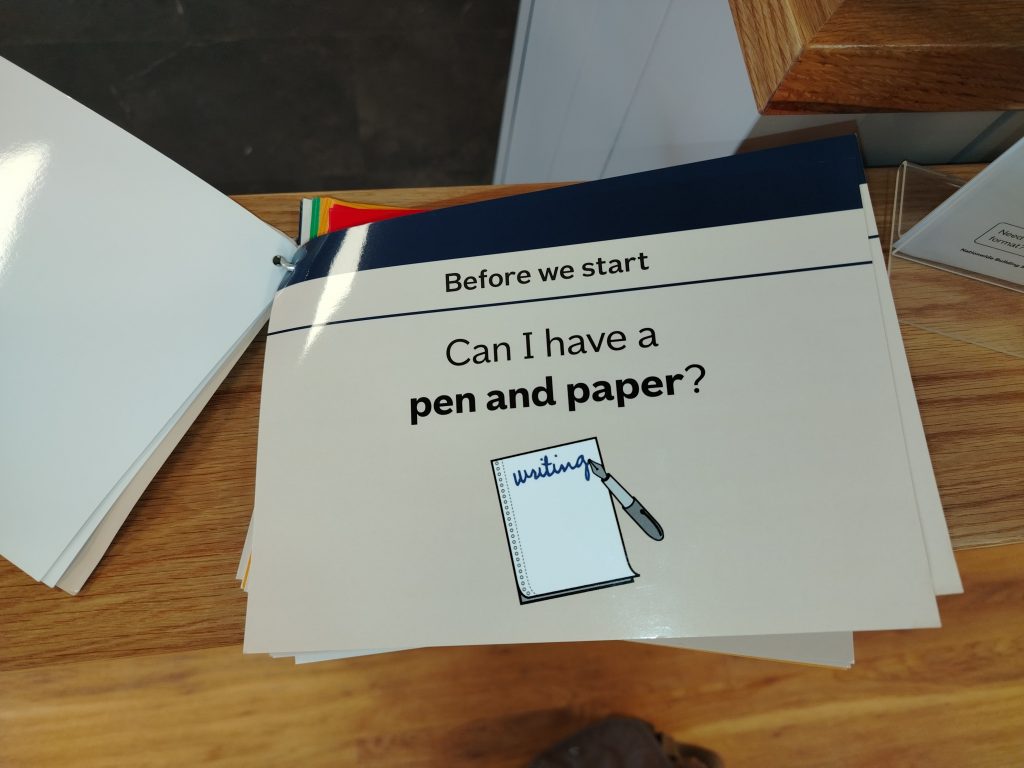
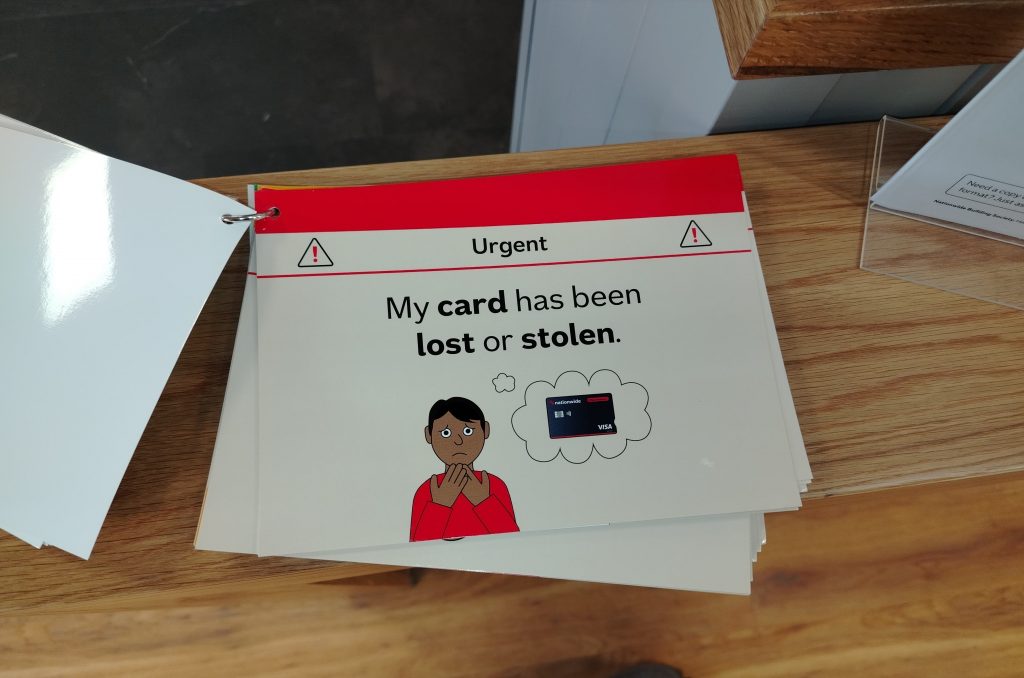
I’d like to see these in more places, because someone’s ability to speak has no bearing on their intelligence, autonomy, capacity or the banking needs they have. People who don’t communicate through speech have the same rights to life, employment, education and services as those of us who can communicate through speech.
And those of us who can, would do well to remember that we can’t assume we will always be able to communicate in this way. Communication equity is for everyone.